Signapse
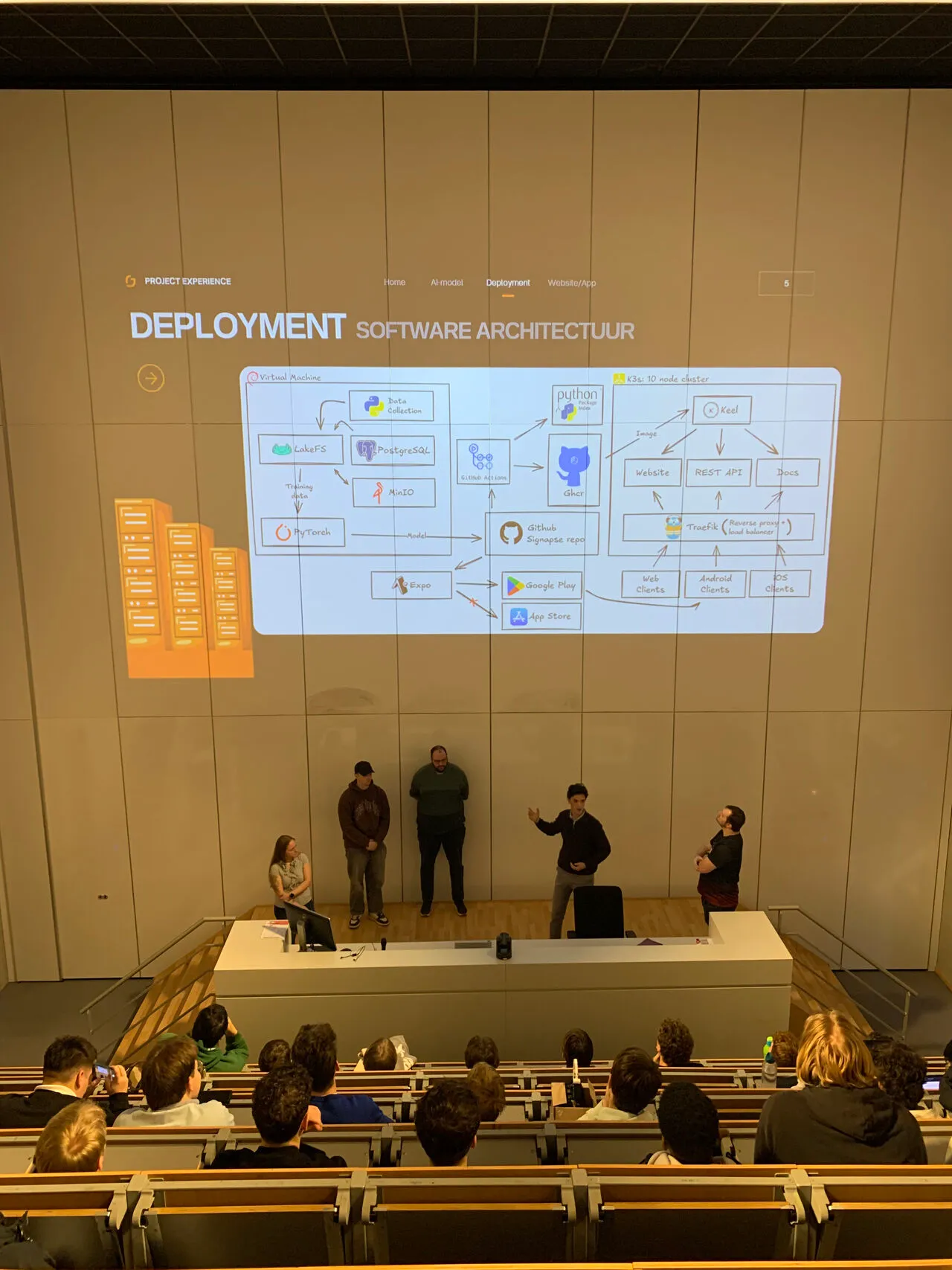
While presenting the tech stack used in the Signapse project.
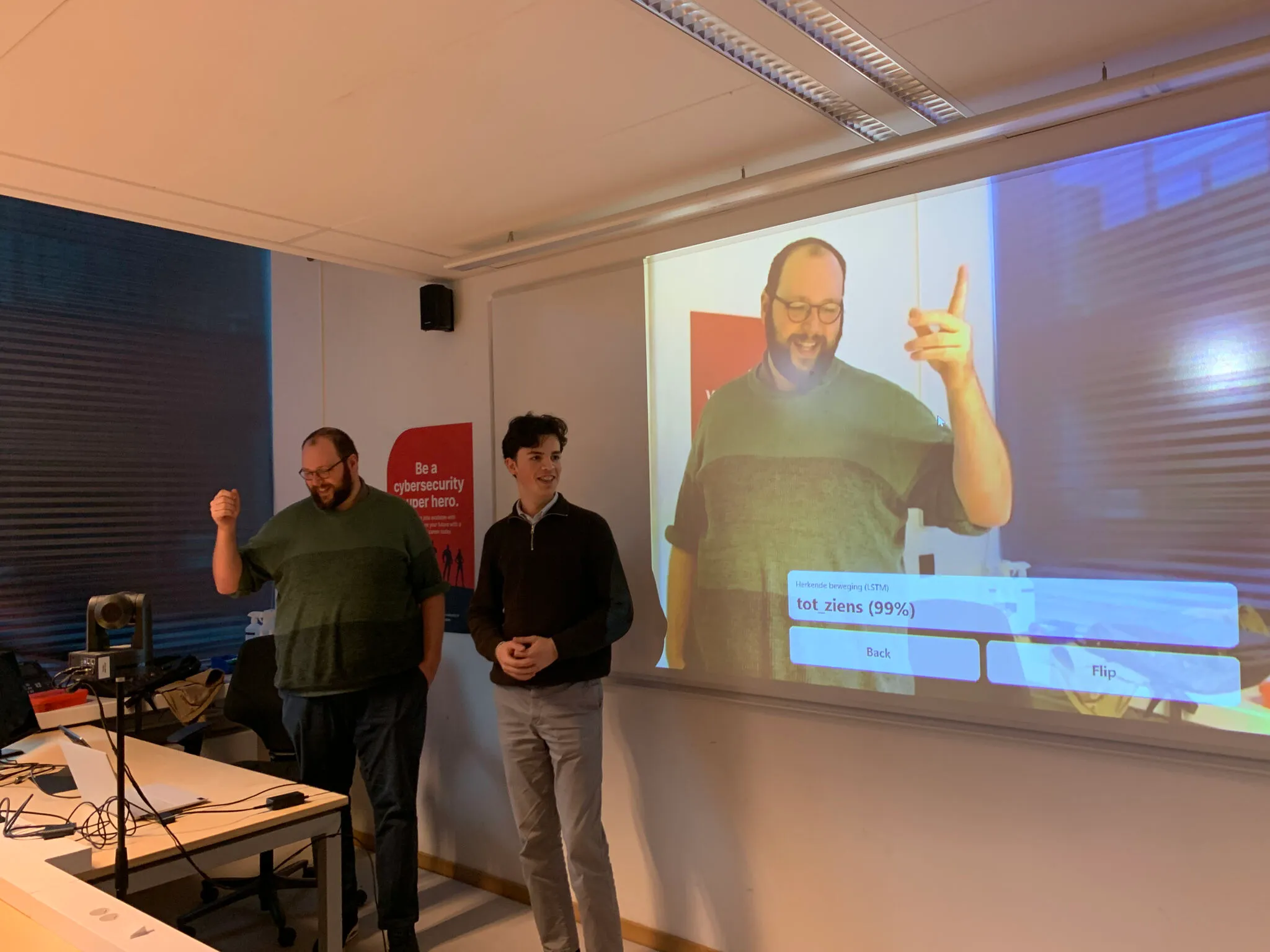
The demo of the Signapse application in action at VIVES.
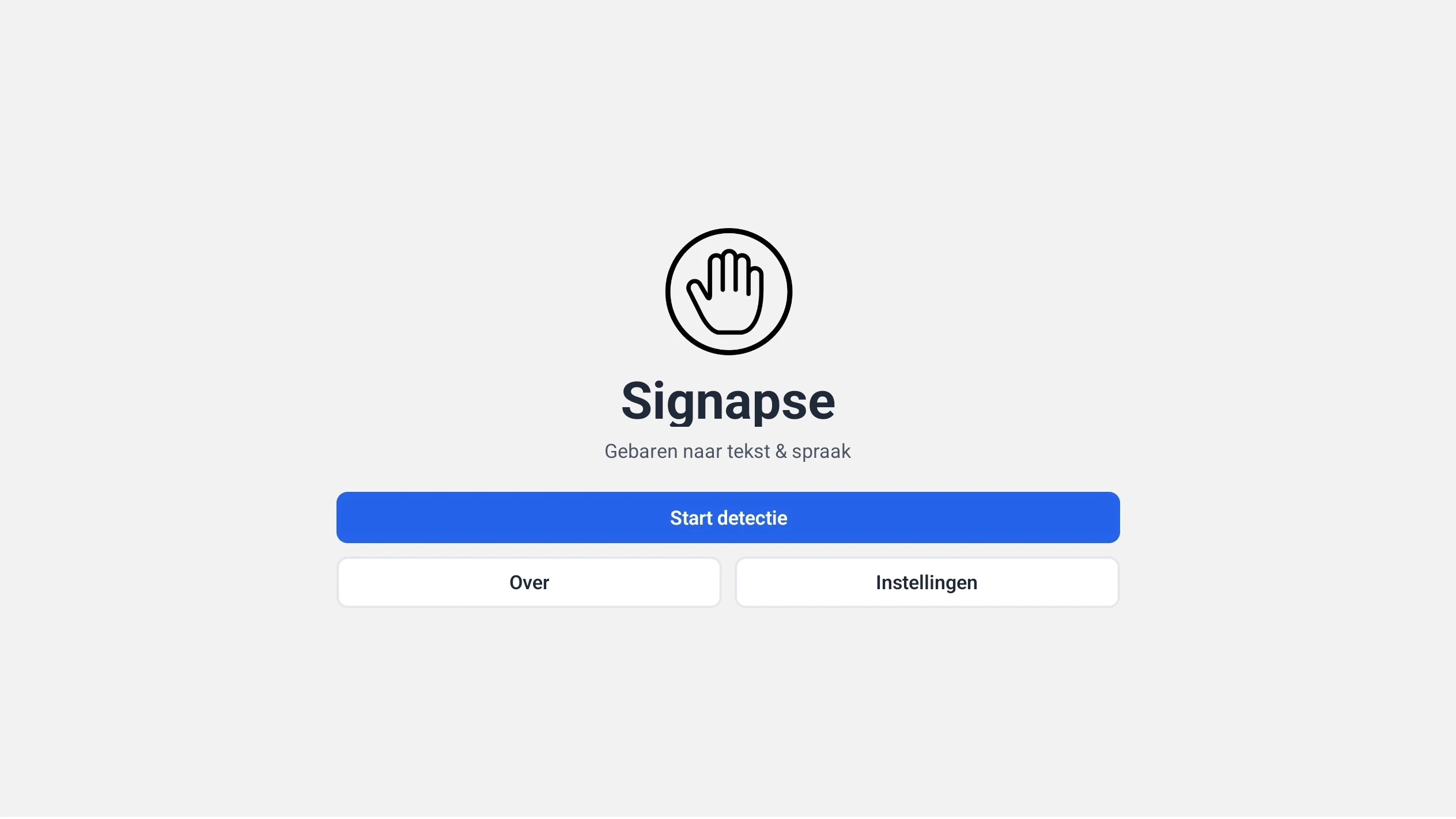
Signapse application home page.
Signapse is an accessibility application built during VIVES Project Experience that closes the communication gap between deaf or hard-of-hearing individuals and hearing people. It uses the phone’s camera to recognise sign language gestures in real time and converts them to text and synthesised speech — no interpreter required.
AI Pipeline
The core intelligence is a multi-model pipeline that combines two complementary techniques:
- MediaPipe extracts hand and body-pose landmarks from each video frame, producing structured spatial data rather than raw pixels
- A PyTorch LSTM network analyses sequences of those landmarks to classify gestures over time, capturing the motion patterns that distinguish one sign from another
- The pipeline supports both ASL (American Sign Language) and VGT (Flemish Sign Language), recognising individual letters and full words
The landmark extraction and classification logic is packaged as smart_gestures, a standalone Python library published on PyPI, making it reusable across all system components.
Architecture
Signapse is structured as three loosely coupled layers:
- Mobile frontend — a React Native app written in TypeScript that streams camera frames and displays transcription results
- AI backend — a FastAPI service that receives landmark data, runs inference, and returns predictions with low latency
- Infrastructure — containerised with Docker and orchestrated on Kubernetes, with a CI/CD pipeline automating builds and deployments
What I Built
My contributions spanned model training in PyTorch, authoring the smart_gestures package, wiring the FastAPI inference endpoint, and configuring the Kubernetes manifests. The project sharpened my ability to take a research-grade model from a notebook to a production-ready service that responds fast enough for a real conversation.
Technologies Used
- AI
- Python
- Kubernetes
- PyTorch
- React Native
- CI/CD
- FastAPI
- Docker
- TypeScript